What kind of change was Porvoo looking for?
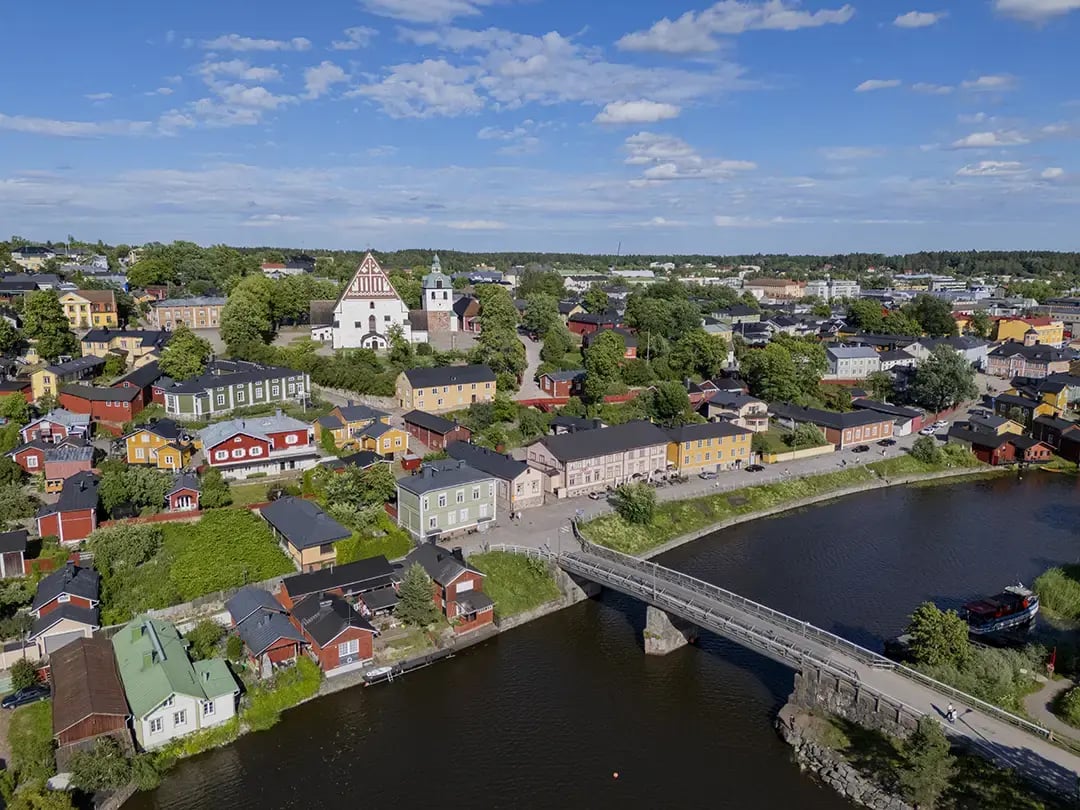
Image 1. Aerial view of City of Porvoo.
Porvoo wanted to make street maintenance more structured, transparent, and less dependent on individual knowledge.
The goal was not to add complexity, but to:
-
Bring planning, execution, and documentation into one place
-
Improve real-time visibility of ongoing work
-
Support fact-based management and development
This type of challenge is familiar to many local authorities responsible for everyday infrastructure maintenance.
How does Autori support Porvoo’s street maintenance?
Autori brings street maintenance planning, execution, and documentation into a single system.
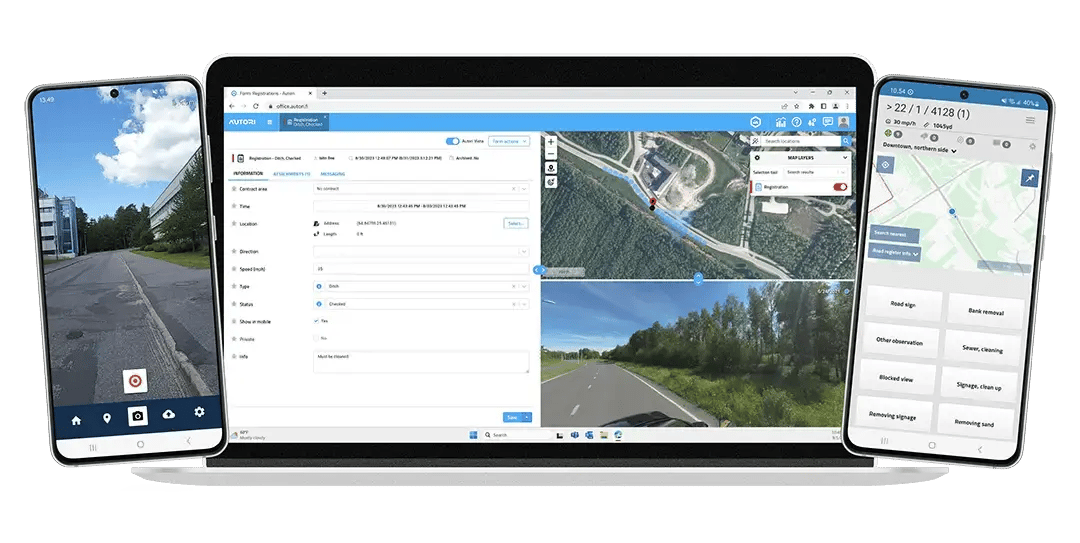
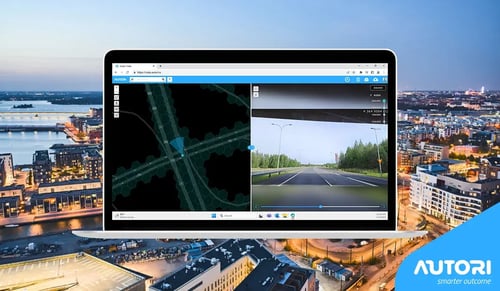
Image 2. Autori Vista Camera app for continuous road photography, Autori Office for managing work, observations and maintenance routes and Autori Mobile app for creating observations and work tasks on the field.
Data collected from the field — including location data, timestamps, and visual documentation — forms a real-time operational picture. Supervisors can then steer operations based on current information without separate data collection, manual follow-ups, or parallel reports.
This creates a shared situational awareness for daily maintenance work.
What has changed in practice?
In practical use, the system has:
-
Reduced overlapping and duplicate work
-
Improved traceability of maintenance activities
-
Significantly increased transparency across operations
At the same time, Porvoo has created the foundation for data-driven management, where decisions are based on up-to-date and verifiable information instead of assumptions or fragmented reports.
How is visual data used in everyday operations?
Porvoo uses Autori Vista as part of its operational toolkit for managing visual street data.
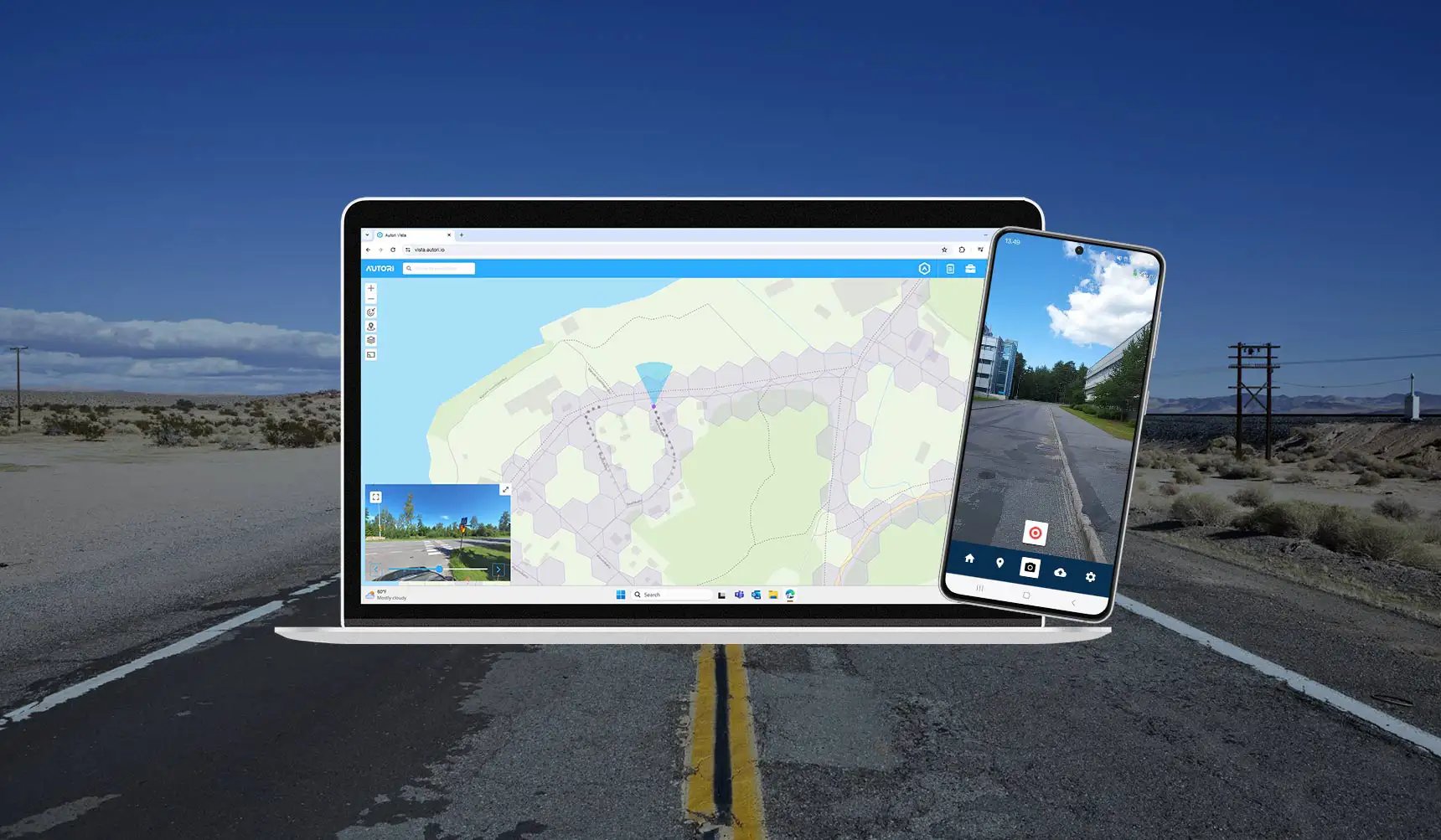
Image 3. Autori Vista image viewer and Vista Camera app for continuous road photography.
Vista is already in active use, and its scope is expanded gradually as part of everyday street maintenance operations. Visual documentation from the field supports the real-time operational view and strengthens transparency across teams.
Images are not stored only for documentation purposes but are actively used to support supervision, coordination, and follow-up.
How extensive is Porvoo’s visual street dataset today?
Visual data is a key part of Porvoo’s daily maintenance work and is centrally managed with the Autori Vista and Autori Field Tools solutions. Today, the City already has access to:
-
Nearly one million flat (dash) images covering street environments
-
Over 8,000 panoramic (360°) images, linked to specific locations
New imagery is captured daily, continuously expanding the visual baseline of the street network.
This growing dataset ensures that the operational view is not static. Instead, it reflects current on‑street conditions and supports supervision, planning, and follow‑up work with up‑to‑date visual evidence.
Importantly, images are not collected for archival purposes only. They are actively used as part of everyday operations to support transparency, traceability, and data‑driven decision‑making.
What has Autori enabled for management and development?
By consolidating operational data and visual information:
-
Management has better visibility into current activities
-
Work can be steered based on verified, real-time data
-
Development discussions are grounded in actual operational evidence
This enables a more sustainable and scalable approach to street maintenance management.
“In street maintenance, a key challenge was the fragmentation of information and reliance on individual people. There was no real-time overall view of work progress or resource usage, which made management and development difficult.
Autori has transformed the operating model into a structured and transparent one. The system brings together planning, execution, and documentation into a single place. Data collected from the field — location, timestamps, and visual documentation — creates a real-time operational picture that allows management to steer operations without separate information gathering.
In practice, the system has reduced overlapping work, improved traceability, and significantly increased transparency. At the same time, it has enabled data-driven management based on up-to-date and verifiable data.”
— Keijo Lehtikangas, Maintenance Manager, City of Porvoo
Why is this relevant for other local authorities?
Porvoo’s experience shows how everyday street maintenance can be improved by:
-
Consolidating fragmented operational information
-
Increasing transparency without adding complexity
-
Supporting management with real-time, verifiable data
The approach is directly applicable to other local authorities looking to strengthen operational clarity and data-driven decision-making in infrastructure maintenance.
Are you interested in our software solutions? Feel free to contact us and our sales team will be in touch with you!

Ari Immonen
Director, Business Development
Autori